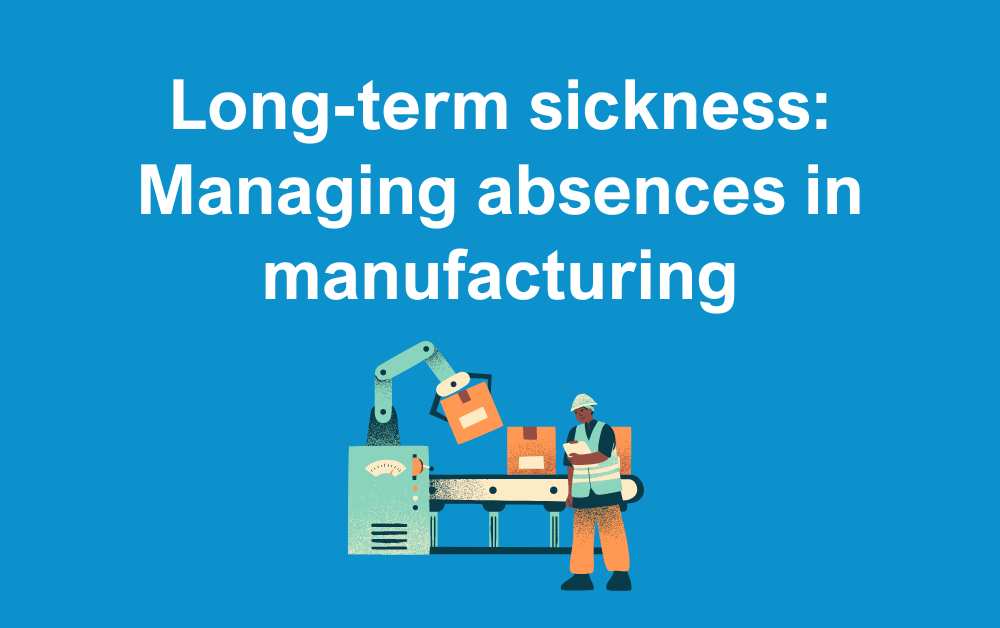
The most recent report by the ONS showed that sickness levels in the manufacturing industry was at 2.6%. This was the second highest out of all other sectors. Long-term sickness can have a significant impact in manufacturing environments, where roles are often physically demanding and production schedules rely on consistent staffing. Extended absences can place additional pressure on remaining employees, increase overtime costs, and disrupt operational efficiency.
For employers, managing long-term sickness is not only about maintaining productivity, but also about supporting employee wellbeing and ensuring fair, lawful processes are followed. Having clear procedures in place, maintaining regular communication, and planning for safe and sustainable returns to work are essential to minimise disruption while protecting both the employee and the business.
Create a Comprehensive Absence Policy
Creating a robust absence policy is essential for managing long-term absences effectively. Your policy should include:
- Reporting procedures: Define how employees should notify their supervisors of their sickness, including the necessary notice period.
- Medical certification: Specify requirements for medical documentation, such as a doctor’s note, to verify the validity.
- Pay and benefits during absence: Clarify how pay and benefits, including SSP and sick pay policies, will be handled during long-term absence.
- Return-to-work process: Outline the steps for employees returning to work after an extended time off, including any necessary accommodations.
e-book content
There is a series of things you can do to encourage or improve good health and wellbeing; these play a crucial role in absence management, alongside the no-so-nice things, like disciplinaries for excessive or persistent absence, or those cases where you know your employee is pulling a fast one.
Download the Absence Management eBook
Maintain regular and supportive communication
One of the most important steps to managing long term sickness is keeping in touch with the employee throughout their absence. This should be supportive rather than intrusive.
Employers should:
- Agree how and when contact will take place
- Provide updates on the workplace where appropriate
- Check on the employee’s wellbeing and expected recovery
- Keep clear records of all communication
This helps employees feel supported and reduces anxiety about returning to work.
Consider reasonable adjustments
Employers have a duty to consider reasonable adjustments, particularly if the employee’s condition could be classed as a disability under the Equality Act 2010.
Examples in manufacturing may include:
- Temporary or permanent adjustments to manual handling duties
- Phased return to work
- Adjusted shift patterns
- Redeployment to lighter or alternative duties
- Providing ergonomic equipment
Adjustments can support recovery and help retain valuable, experienced employees.
Offer Supportive Resources
Providing support resources can make a significant difference for employees dealing with long term sickness. Consider offering access to Employee Assistance Programs (EAPs) or counselling services to help employees cope with personal challenges. Additionally, keep them informed about their health insurance coverage and any other benefits they may be entitled to during their time off.
Plan and manage the operational impact
Long-term absence can place strain on production targets and other team members. Employers should plan ahead to minimise disruption.
This may involve:
- Temporary cover or agency workers
- Cross-training employees to cover critical roles
- Adjusting production schedules where necessary
- Monitoring overtime levels to prevent burnout
Having a clear long term sickness management process helps maintain operational stability.
Hold formal absence review meetings
If absence becomes prolonged, formal review meetings allow employers to assess the situation and agree next steps.
These meetings should cover:
- Current medical position
- Likely return-to-work timeframe
- Support or adjustments required
- Whether the employee is able to return to their role
This ensures decisions are fair, consistent, and evidence-based.
Implement Return-to-Work meetings
When an employee is ready to return to work after a long term sickness, having a structured return-to-work program in place can be highly beneficial. This program should involve:
- A meeting to discuss the employee’s readiness to return and any necessary accommodations.
- A gradual return, allowing the employee to ease back into their regular duties.
- Support for any physical or emotional challenges the employee may face upon their return.
Understand Legal Obligations
- The Equality Act 2010: This legislation prohibits discrimination against employees with disabilities. Employers must make reasonable adjustments to accommodate disabled employees returning to work after a long-term absence.
- The Statutory Sick Pay (SSP): Employers must provide SSP to eligible employees who are unable to work due to illness or injury. Familiarise yourself with the eligibility criteria and payment rates.
Maintain Detailed Records
Comprehensive record-keeping is essential for managing long term absence effectively and complying with UK employment laws. Document all absences, including reasons, communication, and any adjustments made. This documentation helps identify trends and areas for improvement.
When long term sickness becomes unsustainable
In some cases, employees may be unable to return to work. Employers must follow a fair and reasonable process, supported by medical evidence and consultation, before considering capability dismissal.
Failing to follow a fair process can lead to employment tribunal claims, so careful documentation and professional advice are essential.
Preventing long-term absence in manufacturing
Prevention is just as important as management. Employers can reduce absence by:
- Investing in health and safety
- Providing manual handling training
- Monitoring workload and fatigue
- Supporting mental health and wellbeing
- Training managers to recognise early warning signs
Proactive measures help protect both employees and productivity.
How The HR Booth can support manufacturing employers
Managing long term sickness can be complex, particularly in safety-critical environments. Our team supports manufacturing businesses by providing clear guidance, helping managers follow fair processes, arranging occupational health referrals, and ensuring policies are up to date. We work alongside you to balance employee wellbeing with operational needs, helping you manage absence confidently and reduce risk.