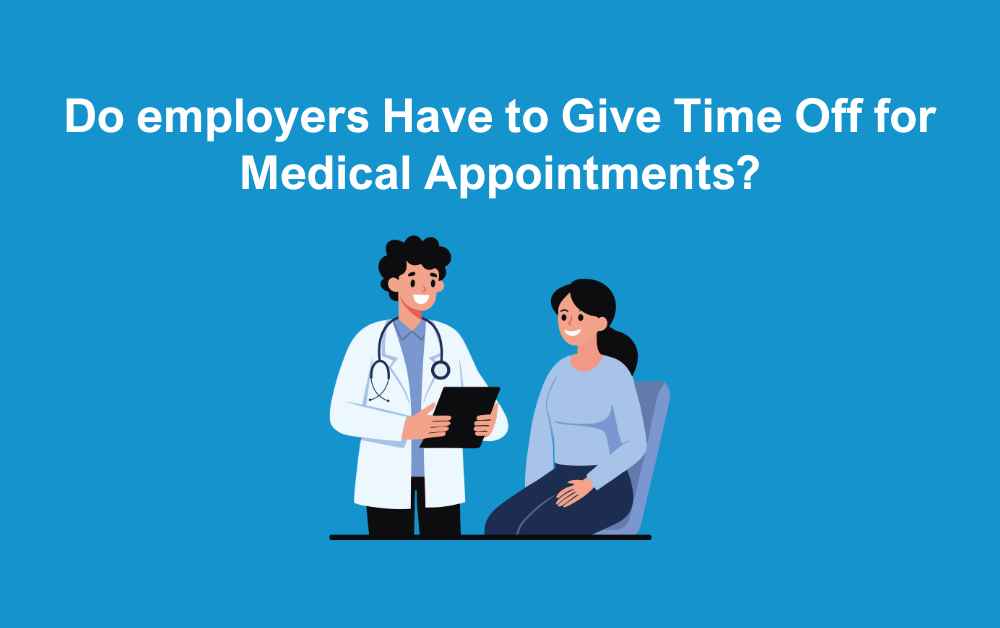
Understanding your employees’ rights around time off for medical appointments is essential for any responsible employer. Whether it’s a routine check-up or a specialist referral, medical appointments can raise questions about entitlement, pay, and policy. In this blog, we’ll explore what the law says, how different types of appointments are treated, and what best practice looks like when supporting your workforce’s health needs.
Do employers have to give time off for medical appointments?
In most cases, employees don’t have a legal right to take time off work to attend a doctors appointment. However, you have a ‘duty of care’ as an employer to protect your workers safety, health, and wellbeing at work as much as possible. Due to this, most employers will let their staff take time off for a medical appointment if they are unable to rearrange it. This type of appointment can include:
- Hospital
- Doctors
- Dentist
- Mental health support such as counselling
Allowing this time off is up to your discretion. That said, it’s often challenging for staff to secure appointments outside of standard working hours, especially for hospital visits or specialist care. Being flexible and accommodating in these situations not only supports your team’s wellbeing but also helps build trust and loyalty within the workplace. Employees are likely to appreciate your understanding and support when they need time for essential health-related matters.
Check Employee Contracts
It’s important to check employee contracts to make sure there’s no contractual obligation to provide full pay when an employee takes time off for medical appointments.
if this is not stated in their contract, employees don’t have an automatic right to paid time off. You can ask them to arrange appointments outside of working hours or use annual leave. If they’ve used their leave, you may offer unpaid leave or agree for them to make up the time later.
However, it’s important to consider the reason for the request. Medical appointments support employees’ health and wellbeing, and being too rigid could harm morale and the working relationship.
In urgent or unforeseen cases, time off may be classed as sickness absence, meaning statutory or contractual sick pay could apply.
If you choose to offer paid or unpaid time off for medical appointments as a benefit, outline it clearly in the employee handbook or contract and apply the policy fairly.
Supporting a Family Member at a Medical Appointment
Employees may be entitled to time off for dependants if they need to support a family member or someone who relies on them in an emergency. This type of leave is typically reserved for unexpected or urgent situations, such as a sudden illness or medical crisis.
If the appointment is pre-planned—such as a routine check-up or a scheduled operation—it’s unlikely to fall under this category. In these cases, the employee may need to request annual leave or use other forms of agreed time off. That said, every situation is different, and the specific circumstances should always be taken into account.
Disability-Related Medical Appointments
Under the Equality Act 2010, if an employee has a disability, reasonable adjustments may include allowing time off for medical appointments related to their condition. This may not always be paid, but flexibility is essential to remain compliant and avoid discrimination claims.
Pregnancy Related Appointments
Under UK employment Law, pregnant employees have a right to ‘reasonable’ paid time off to attend antenatal appointments. This can include:
- pregnancy related medical appointments
- pregnancy classes related to fitness, health, or relaxation
- sessions that helps your employees mental health and wellbeing
Paid time off also includes travel to and from appointments. Your employee must give you as much notice as possible for this time off work.
Final Thoughts
While there may not always be a legal requirement to offer time off for medical appointments, taking a fair and flexible approach can have long-term benefits for your business. Supporting your employees’ health needs—whether physical, mental, or family-related—helps build a culture of care and respect. This in turn can boost morale, retention, and overall productivity.
Clear policies, consistent communication, and a bit of flexibility can go a long way in helping your team feel supported.
Need Support with Absence Management?
Navigating the complexities around absence management and employee rights—such as time off for medical appointments—can be challenging. That’s where we come in.
At The HR Booth, we support businesses across the UK with practical, compliant advice tailored to your organisation. Whether you need help updating your policies, managing individual cases, or simply want reassurance that you’re doing the right thing, we’re here to help.
Contact us today to find out how we can support your business and take the stress out of managing time off and employee wellbeing. Let’s work together to create a supportive, fair, and legally sound approach to managing absence in your workplace.