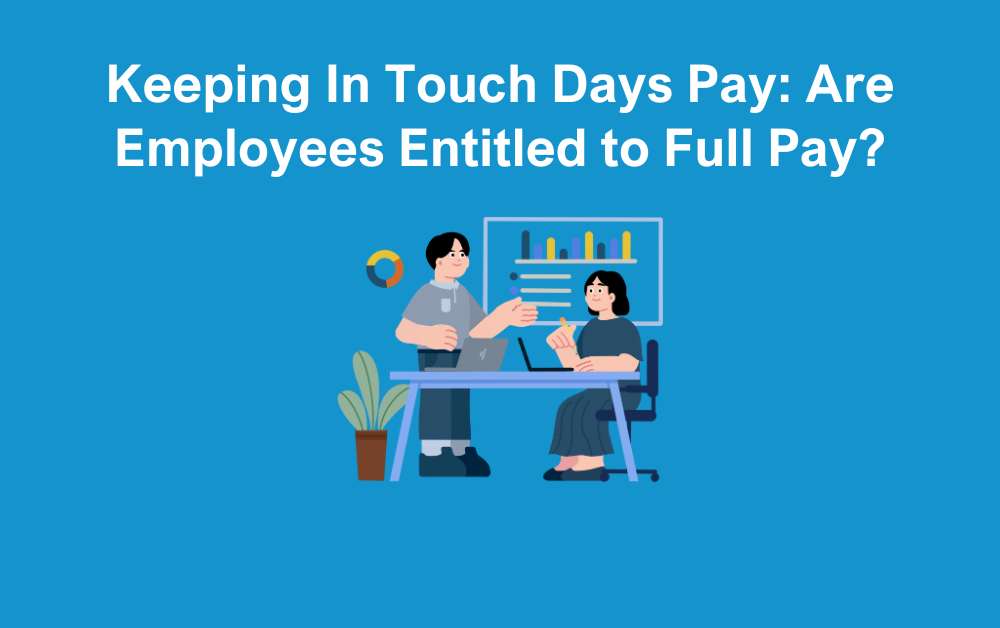
Keeping in Touch days can be a valuable tool for maintaining communication and supporting a smooth return to work during periods of family-related leave. However, they are also an area where confusion often arises — particularly when it comes to pay. Many employers are unsure whether they must offer KIT days, whether employees are obliged to work them, and most commonly, whether full pay is legally required for any work carried out.
In this article, we’ll explain what KIT days are, how they work in practice, and what the law says about payment, so employers can approach them with clarity and confidence.
What are Keeping in Touch Days?
These are days where your employee has the opportunity to work while on maternity, adoption, or shared leave. This allows staff to stay connected and ease back in to work without impacting or ending statutory maternity, adoption, or shared parental pay.
KIT days are completely optional for both employers and employees, and this should be discussed before your employee begins their leave.
How many KIT days are employees entitled to?
Employees on maternity or adoption leave can work up to ten keeping in touch days without bringing their leave or pay to an end. This can be taken at any time during the period of leave apart from the two weeks of compulsory leave immediately after birth or adoption. This is four weeks for factory workers. These days don’t have to be taken consecutively.
Staff can also work up to 20 shared parental in touch days without bringing shared parental leave or pay to an end.
KIT days can’t be split. Therefore, any day that your employee works during this leave counts as a keeping in touch day. This applies even if they have only worked for two hours.
Pay for Keeping in Touch Days
The law does not specifically state how employers must handle contractual pay when an employee works a Keeping in Touch (KIT) day during maternity, adoption or shared parental leave. In other words, there is no fixed rule requiring full pay or a particular rate. It is largely left to the employer and employee to agree.
An employer can choose to set out the payment arrangements for KIT days within the employment contract or a family leave policy. Alternatively, they may decide the rate of pay on a case-by-case basis. For example depending on the type of work being carried out or the length of time worked that day.
However, employers must still meet their wider legal obligations. This includes ensuring the employee is paid at least the National Minimum Wage for the hours worked and upholding equal pay requirements so that men and women receive the same pay for work of equal value.
Choosing to Pay Full Contractual Pay
Final Thoughts: Communication and Fairness
Keeping in Touch days can be highly beneficial when handled correctly. They allow employees to stay connected, attend important training or meetings, and ease the transition back to work. However, problems often arise where expectations are unclear — particularly around payment.
The most effective approach is open communication, written agreement in advance, and consistency. When employers are transparent about pay and employees feel the arrangement is fair and voluntary, KIT days become a supportive tool rather than a source of confusion or dispute.
If you would like support from our HR Consultants on keeping in touch days pay, get in touch with us today.