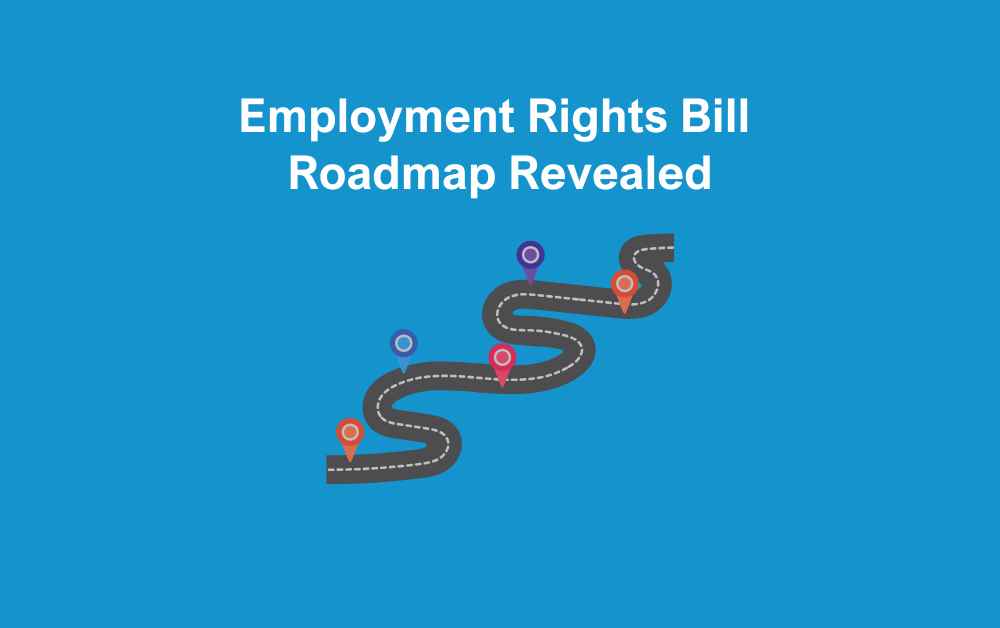
The Government revealed the Employment Rights Bill Roadmap this week, providing businesses with timelines of when measures will come in to effect. Designed to give businesses across the UK time to adapt, the roadmap includes a phased rollout of reforms from 2025 through to 2027.
Business Secretary, Jonathan Reynolds said: ”Since the beginning, we have been working with businesses big and small to ensure this Bill works for them, and this roadmap will now give them the clarity and certainty they need to plan, invest and grow.”
As a leading HR consultancy in the UK, we’ve broken down the key changes to help you understand how they will impact your organisation.
Key Highlights of the Employment Rights Bill Roadmap
The roadmap outlines several headline reforms, including:
- Restoration of trade union rights and collective bargaining
- Reforms to statutory sick pay
- New family leave entitlements
- A ban on exploitative fire-and-rehire practices
- Strengthened equality protections
- Expanded rights for workers in public-facing roles
Some of the more complex reforms, such as changes to unfair dismissal rights and flexible working, will not come into effect until 2027.
Employment Law Changes Coming in 2025
Restoring Union Rights and Collective Protections
The Employment Rights Bill Roadmap revealed from 2025, changes to the Trade Union Act 2016 and the Strikes (Minimum Service Levels) Act 2023 will take effect. These reforms aim to:
- Strengthen collective bargaining
- Improve workplace relations
- Reduce the likelihood of strike action
- Protect workers from dismissal when participating in lawful industrial action
April 2026: Family Support and Sick Pay Reforms
Day-One Family Leave Rights
Employees will gain access to:
-
Day-one rights to paternity leave
-
Day-one access to unpaid parental leave
This will provide immediate support to working parents from their first day of employment.
Statutory Sick Pay (SSP) Changes
The Employment Rights Bill Roadmap also announced the lower earnings limit and waiting period for SSP will be scrapped. This means over 1.3 million low-paid workers will now qualify for statutory sick pay.
Enhanced Redundancy Protections
The maximum collective redundancy protective award will be doubled to better support employees affected by mass redundancies.
Whistleblowing Protections Strengthened
New legal protections will safeguard employees who report wrongdoing, helping to foster a culture of transparency and accountability in the workplace.
October 2026: Major Employment Rights Reforms
Fire and Rehire Ban
The Government will ban unfair fire and rehire practices. Employers will no longer be able to dismiss and rehire staff on worse terms.
Fair Pay Agreement in Adult Social Care (England)
A new negotiating body will be introduced to establish fair pay agreements in the adult social care sector, improving wages and working conditions. This is one of the key changes included in the Employment Rights Bill Roadmap.
Stronger Tipping Laws
New regulations will require consultation with staff to ensure fairer and more transparent distribution of tips.
Workplace Harassment Protections
Employers will be legally required to:
-
Take all reasonable steps to prevent sexual harassment
-
Prevent harassment of employees by third parties (e.g. customers, clients)
This will enhance protection in all work environments, especially public-facing roles.
Trade Union Access and Protections
A new package of reforms will:
-
Introduce enhanced rights for trade union representatives
-
Strengthen protection from detriment for employees taking part in industrial action
-
Guarantee trade unions’ right of access to workplaces
2027: Final Stage of Employment Law Reforms
The Employment Rights Bill Roadmap reveals that some of the more complex reforms will come into force in 2027. This will be after further consultation between the Government, employers, and trade unions. These include:
- Bereavement leave entitlement
- Day-one protection from unfair dismissal
- Stronger rights for pregnant employees
- An end to exploitative zero-hours contracts
- Greater predictability in working hours for all employees
Additionally, the Government will promote the introduction of:
- Gender pay gap action plans
- Menopause workplace policies
These will start on a voluntary basis, backed by improved guidance on harassment prevention and flexible working.
Ongoing Consultation and Support for Employers
Although the Employment Rights Bill Roadmap has been revealed, consultations with trade unions, employers and stakeholders will continue throughout 2026. Acas will play a key role in supporting businesses through these transitions, offering guidance at each stage. However, concerns have been raised about Acas’ capacity to meet demand without additional funding.
What This Means for UK Employers
The Employment Rights Bill represents one of the most significant overhauls of UK employment law in recent years. While the roadmap offers clarity, many details remain under discussion. Staying ahead of these changes is essential for compliance and effective HR planning.
HR Support Across the UK – Get Expert Help
At The HR Booth, we specialise in helping UK businesses prepare for legislative changes and implement best-practice HR solutions. If you need tailored guidance on the Employment Rights Bill Roadmap or support adapting your policies, we’re here to help.
Contact us today to speak with our team of HR experts.