Can I force my employees to get the Covid-19 vaccine?
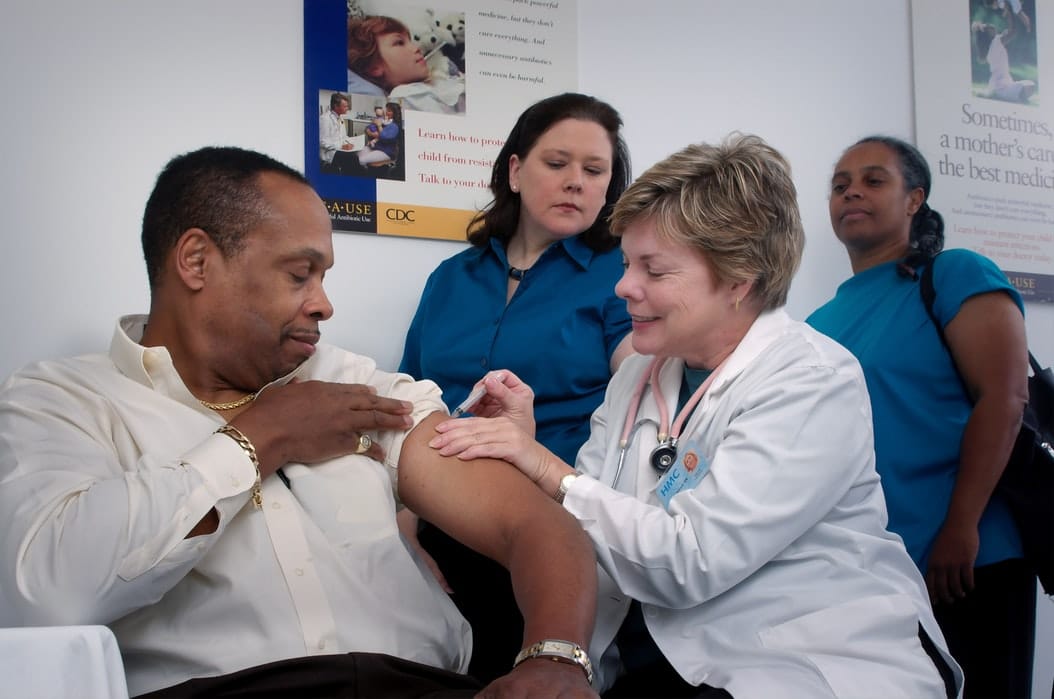
With the race to get people vaccinated well underway, we’ve already had some questions from clients. The most popular question is if they can force employees to have the Covid-19 vaccine.
This is new territory and currently many employers already offer the seasonal flu vaccine to employees. However, this is done on a voluntary basis. We will watch developments closely over the coming weeks’ but we wanted to give some guidance on what we know as things stand.
The answer to the question is no, you can’t force employees to have the vaccine. A vaccination requires an individual’s voluntary consent.
Under the Equality Act, there’s a protected characteristic called “Philosophical belief”. There have already been successful cases at tribunal around people’s beliefs on climate change and vegans. Someone being against the vaccine could be classed as having a Philosophical belief.
What does the law say?
At the moment, there are no statutory provisions that could force anyone to have the Covid-19 vaccine. In fact, the Public Health (Control of Disease) Act 1984 actually states that members of the public should not be compelled to undergo any mandatory medical treatment, including vaccinations.
If an employer was to therefore “force” employees to have the vaccine, they could be in breach of human rights.
What can I do to encourage my employees to have the vaccine?
A better approach is to encourage staff to have the vaccine. The government will be doing a big marketing push on this. There is also talk that gaining access to certain places or travel could be dependent on you being vaccinated. Depending on the work your employee does, if these restrictions are put in place then this could impact on your employee being able to fulfil part (or all) of their role. For example, if you provide services into public places such as sport stadiums and it becomes compulsory that to gain access to these venues you must provide evidence of being vaccinated, then clearly this will present some problems.
In your own workplace, you could potentially request access to certain parts of your building such as your staff area or canteen is subject to being vaccinated.
You will need to be careful that any refusal to be vaccinated where it is related to a disability/protected religious/philosophical belief, that you do not discriminate. A better approach is to educate and support employees and share the relevant information.
Next Steps
As a Leader, you should already be creating a positive culture and opening up two-way communication channels. Listen to any concerns your team have on the vaccination. In addition, part of your communication strategy over the coming weeks should be focused on sharing accurate information on the vaccine. Contact us for any further HR support.