It’s been a couple of weeks since we witnessed the terrible scene of a professional footballer collapsing on the pitch during a Euro 2020 game having suffered a cardiac arrest. After receiving first aid, defibrillator, and heart massage, the medical team were able to revive Christian Eriksen. This has reminded us how important it is to learn CPR and how First Aid in the workplace should be taken seriously.
What is CPR?
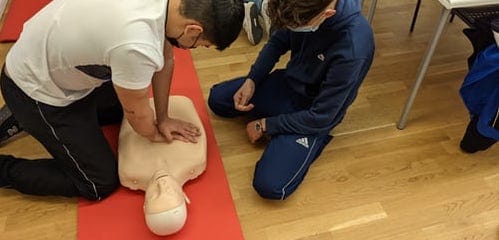
Cardiopulmonary Resuscitation (CPR) is an emergency procedure that is required when someone is in cardiac arrest. This causes the heart to stop pumping blood around the body and to the brain. In addition, chest compressions and rescue breaths are required in an attempt to manually preserve brain function and blood circulation until further measures can be taken.
CPR should only be used if the person is unconscious and not breathing, or unconscious and not breathing normally.
After what happened to Eriksen, the NHS are currently offering free CPR lessons run by volunteers. In addition, you can encourage your employees to undertake this training so they have a better understanding of CPR and First Aid. The NHS decided to provide this training due to the 1000% increase in Google searches for CPR advice.
First aid in the work place
As an organisation, you are legally expected to:
- Provide a correctly stocked and in date first aid kit that employees can have access to.
- A designated person to oversee first aid arrangements, look after equipment, and call emergency services.
- Provide information for employees on first aid requirements in the office
The Health and Safety Executive have enforced these requirements. They can also prosecute businesses if these basic standards are not met.
There’s no law that states that there should be a fully trained first aider in every work place. However, it’s important to put employee wellbeing first and also give staff first aid training by reputable societies.
If you have first aiders in your workplace, you should clearly feature notices throughout the work area. This should include names of the first aiders and also the location of first aid equipment.
Defibrillator
If you are looking for more ways to make the workplace even safer, you can consider having a defibrillator available in the office. When an employee is suffering a cardiac arrest, the defibrillator can be used to shock the heart back in to a normal rhythm. We encourage you to provide employees with training to ensure they can use this safely and correctly.
Find out more about Defibrillators on the St John Ambulance website.
If you would like to find out more about First Aid in the workplace, contact us now.