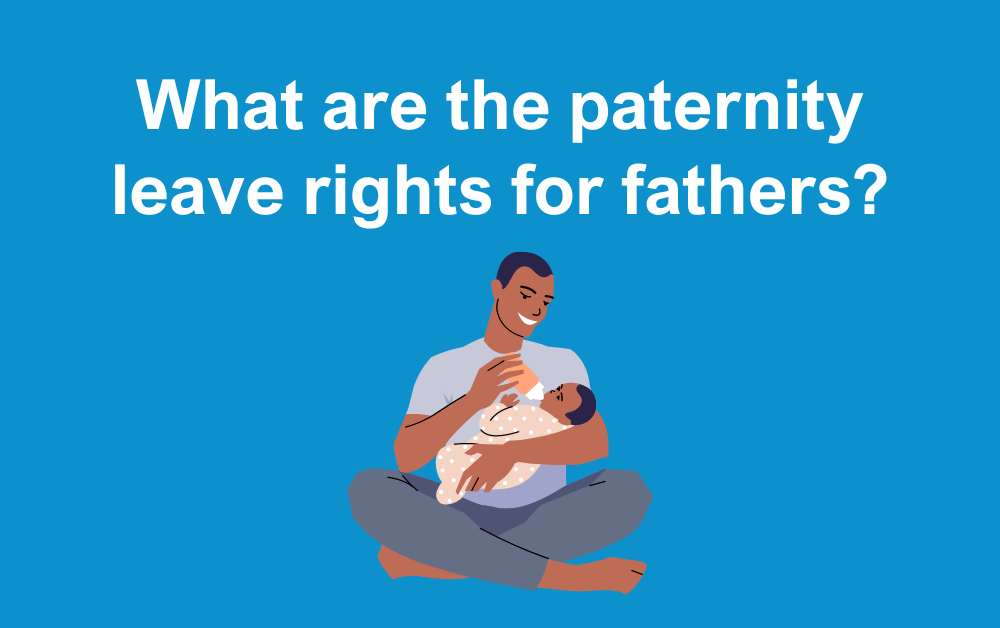
What are the paternity leave rights for fathers?

We get asked HR related questions every day and each week we will be sharing our top question of the week that we have been asked here at The HR Booth.

In this week’s question of the week, Alistair discusses paternity leave.

Question

We have recently had a new appointment start with us and he is asking what happens as his wife is due a baby in November. Could you please give me some information on paternity leave?

Answer

If he has 26 weeks service, 15 weeks before the due date, he will be eligible for shared parental leave where he and his wife can effectively share her maternity leave.  Not many males have taken up this option since this legislation came in during April, but it’s there if he’s eligible.  However, if he has less than 26 weeks service then he will not be eligible for this.

Instead, he will be eligible for 2 weeks paternity leave, which can be taken in blocks of one week and must be taken within 56 days of the birth.  He needs to give details of the dates he wishes to apply for and if he wants to change these he must give you 28 days’ notice.

He will be entitled to be paid Paternity Pay which is currently £139.58 per week.  He can apply for a week’s annual leave and then Paternity Leave, allowing him 2 weeks off but without having to take 2 weeks at the lower rate of pay.  Again, a lot of males tend to use annual leave and not apply for paternity leave due to the pay, but it’s there if he wants to take the time without impacting on his annual leave.

Key thing is to try and get some notice around the dates he wishes to take.

Any issues let me know.

Your Turn

Have any of your staff used shared parental leave since it came into place?

Let us know by leaving a comment.
AI in Recruitment: can employers use AI to shortlist candidates

AI in Recruitment: can employers use AI to shortlist candidates

AI in recruitment is becoming a key tool for businesses looking to improve efficiency and make smarter hiring decisions. From screening CVs to identifying top talent, this system is increasingly being used to streamline time-consuming recruitment tasks, allowing...

New Holiday Recording Rules From 6 April 2026

New Holiday Recording Rules From 6 April 2026

From 6 April, new holiday recording rules requires employers to retain detailed records of holiday pay and leave for a minimum of six years from the date they are created. This applies to all workers, including part-time and those on irregular hours. It also covers...

Managing Underperformance in Manufacturing

Managing Underperformance in Manufacturing

Underperformance in manufacturing is often overlooked. Not because it doesn’t matter, but because employers may feel there simply isn’t time to deal with it. When output targets need met and orders need fulfilled, it can feel easier to work around an underperforming...

New Whistleblower Protection for Sexual harassment

New Whistleblower Protection for Sexual harassment

With employment law changes taking effect from April 2026, one key area for employers to be aware of is whistleblower protection for sexual harassment. Under the new legislation, any disclosure relating to sexual harassment will automatically be treated as a protected...

Bereaved Partner’s Paternity Leave: Prepare Before April 2026

Bereaved Partner’s Paternity Leave: Prepare Before April 2026

Bereaved Partner’s Paternity Leave is new legislation that went live on 6 April 2026. It marks an important step in strengthening support for employees during exceptionally difficult circumstances. This new right applies where an employee loses the child’s mother or...

What is lay off, and when can it be used?

What is lay off, and when can it be used?

What is lay off, and when can it be used? Costs continue to rise for businesses across the UK, with increases to statutory payments and upcoming changes to Statutory Sick Pay adding further pressure from April. As a result, many employers are being forced to make...