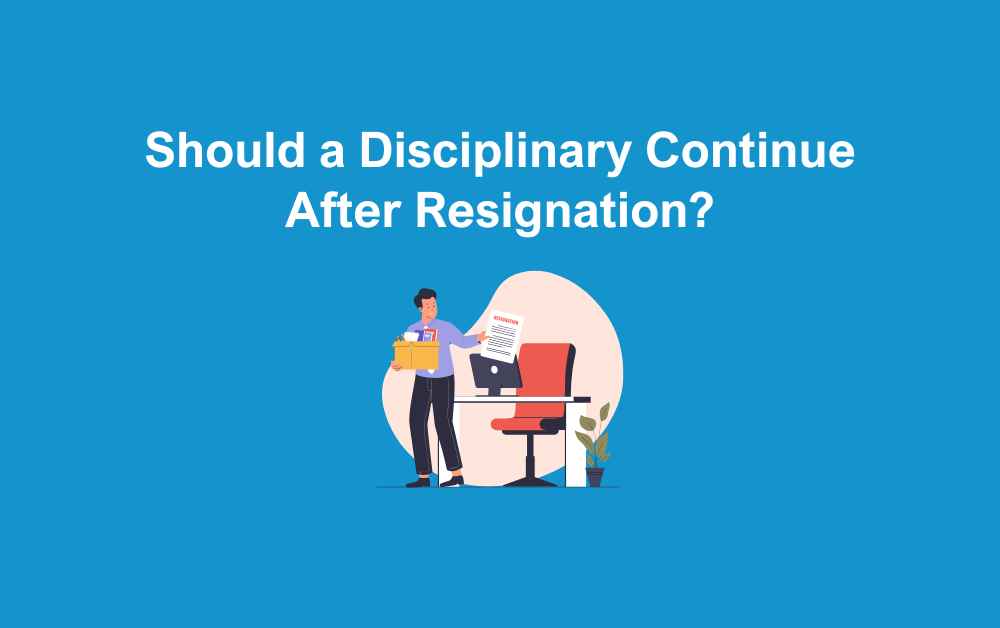
When an employee resigns during a disciplinary process, it can create a tricky situation for employers. You are often left questioning the appropriate steps to take. Should you continue with the disciplinary process or accept the resignation and consider the matter closed? This blog will explore the intricacies of this issue, considering legal obligations, best practices, and the potential implications of various courses of action.
Can you refuse an employee’s resignation?
The notion of refusing an employee’s resignation may seem counterintuitive, as resignation is a unilateral decision by the employee to terminate their employment contract. Generally, an employer cannot refuse to accept an employee’s resignation. Once an employee has given notice of their resignation in accordance with their contract, it is considered legally binding. Attempting to refuse a resignation could be construed as an infringement on the employee’s rights and could potentially lead to legal complications.
Understanding the Legal Framework
Under UK employment law, the primary concern for employers during a disciplinary procedure is to act fairly and reasonably. This obligation is grounded in the Employment Rights Act 1996, which protects employees from unfair dismissal. It is also supported by the ACAS Code of Practice on Disciplinary and Grievance Procedures. Together, these set out the standards employers are expected to follow when addressing misconduct or performance issues, including the need for thorough investigations, clear communication, and the opportunity for the employee to respond.
However, the guidance becomes less clear-cut when an employee resigns partway through the disciplinary process. While the ACAS Code remains a useful reference, it does not explicitly prescribe how employers should respond in such scenarios. This creates a degree of ambiguity, leaving employers to consider factors such as the seriousness of the allegations, the need to maintain professional or regulatory standards, and whether the outcome may have future legal or reputational implications. As such, continuing or halting the process often depends on the specific context and potential risks involved.
Should you continue with the Disciplinary
Whether you should continue with the disciplinary depends on whether the employee has resigned with notice or with immediate effect.
If they have given notice, you should continue with the disciplinary. If this leads to a gross misconduct decision, you are then able to dismiss the employee without notice. In this case, the reason for terminating their employment will be documented as gross misconduct rather than the employee resigning.
If your employee has resigned with immediate effect, it’s unlikely that you need to continue with the disciplinary procedure. However, it’s important to keep any notes you’ve taken so far as it may help you in the future if you need to defend any claims at an Employment Tribunal.
There are situations where continuing the process is essential — particularly if serious misconduct is alleged.
ACAS Guidance states that employers can and should continue disciplinary action post-resignation if the allegations are significant, or if the outcome could affect things like safeguarding, trust, or the future provision of a reference.
Examples of When to Proceed
Continuing a disciplinary after an employee resigns is especially important in certain sectors or situations:
-
Safeguarding Issues: If allegations involve vulnerable groups (children, patients, etc.), employers may have a duty to investigate and report concerns, even if the individual has left.
-
Regulated Professions: For example, employers in the financial services or legal sector must sometimes report disciplinary findings to professional bodies, such as the FCA or SRA.
Seeking Support
Ultimately, whether to proceed with disciplinary action after an employee resigns is a decision that should be made on a case-by-case basis. Employers should consider:
- Seeking legal advice to understand the potential risks and implications of continuing or halting the proceedings.
- Reviewing the company’s disciplinary policy to ensure compliance with internal guidelines.
- Weighing the benefits of concluding the process against the potential impact on the organisation and its employees.
Final Thoughts
Whether or not to proceed with a disciplinary procedure after an employee resigns depends on the circumstances. The severity of the allegation, regulatory requirements, and potential future risks should all be considered.
When in doubt, seek legal advice or consult a qualified HR professional. It’s not just about protecting your organisation legally — it’s about maintaining integrity and safeguarding your people.
Contact Us
If you are going through a disciplinary procedure in your workplace and are in need of outsourced HR support, you can contact our HR experts now.