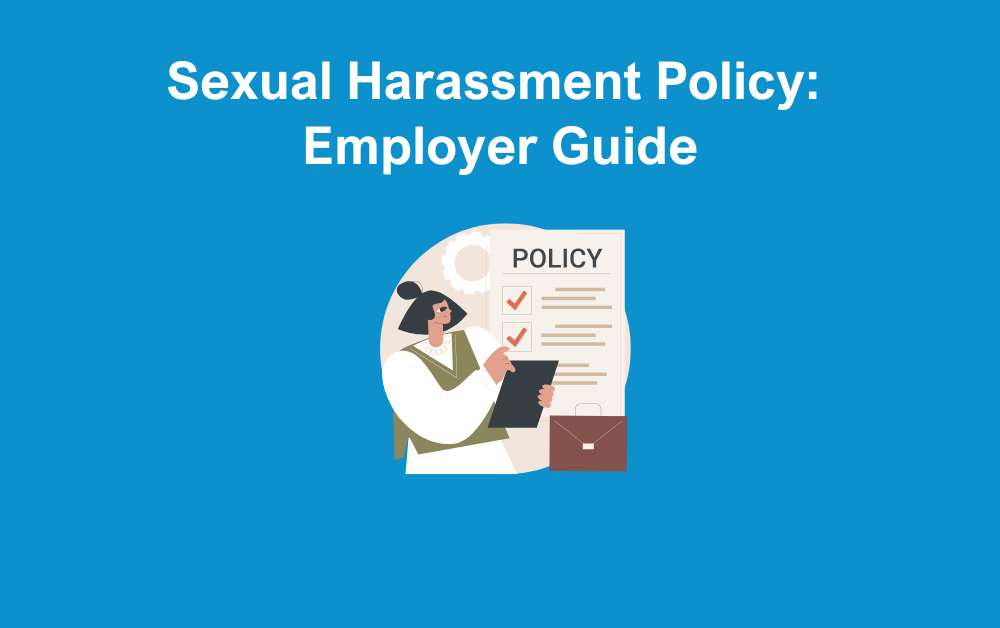
Sexual Harassment Policy: Employer Guide

The law surrounding workplace sexual harassment has changed significantly in recent years.

In October 2024, employers became subject to a new legal duty to take reasonable steps to prevent sexual harassment in the workplace. The Employment Rights Act 2025 strengthened these protections further from April 2026 by making disclosures relating to sexual harassment protected under whistleblowing legislation. This means employees who raise concerns benefit from additional legal protection against detriment or dismissal.

With these changes in place, employers should review the measures they have in place to prevent sexual harassment. One of the most effective ways to demonstrate your commitment is by implementing a clear sexual harassment policy.

What Is a Sexual Harassment Policy?

A sexual harassment policy is a document that sets out your organisation’s commitment to providing a safe, respectful and inclusive workplace.

It explains what constitutes sexual harassment, outlines the standards of behaviour expected from employees, and details how concerns can be reported and investigated. It also helps employers identify potential risks and take proactive steps to prevent harassment before it occurs.

Why Every Employer Needs a Sexual Harassment Policy

Although there is no legal requirement to have a standalone sexual harassment policy, having one is recognised as good practice and can help demonstrate that you have taken reasonable steps to prevent sexual harassment.

A clear policy helps to:

  • Set expectations for workplace behaviour.
  • Encourage employees to report concerns.
  • Provide managers with a consistent process for handling complaints.
  • Demonstrate your commitment to complying with your legal obligations.

Combined with regular training and effective procedures, a sexual harassment policy is an important part of creating a safe workplace.

What the Law Says About Sexual Harassment

Sexual harassment is unlawful under the Equality Act 2010. It is defined as unwanted conduct of a sexual nature that violates someone’s dignity or creates an intimidating, hostile, degrading, humiliating or offensive working environment.

Since October 2024, employers have had a proactive legal duty to take reasonable steps to prevent sexual harassment in the workplace. This includes having a clear sexual harassment policy, providing training, encouraging employees to report concerns, and responding promptly to complaints.

If an employer fails to meet this duty, they could face an Employment Tribunal claim.

What Should a Sexual Harassment Policy Include?

A sexual harassment policy should clearly explain what sexual harassment is, how employees can report concerns, and how the organisation will respond. It should also demonstrate the employer’s commitment to providing a safe and respectful working environment.

A comprehensive sexual harassment policy should include:

  • A statement of commitment – Confirming the organisation’s commitment to preventing sexual harassment and taking all complaints seriously.
  • A definition of sexual harassment – Explaining what sexual harassment is and making it clear that it can be a one-off incident or repeated behaviour.
  • Examples of unacceptable behaviour – Such as unwanted sexual comments, inappropriate touching, offensive messages, or sharing explicit images.
  • Who the policy applies to – Including employees, workers, contractors, agency staff, and work-related events or activities.
  • Reporting procedures – Explaining how employees can raise concerns and who they should report them to.
  • Investigation process – Outlining how complaints will be handled fairly, promptly, and confidentially.
  • Protection from victimisation – Reassuring employees they will not be treated unfairly for reporting or supporting a complaint.
  • Possible disciplinary action – Explaining the consequences of breaching the policy, which may include dismissal.
  • Training and policy reviews – Highlighting the importance of regular training and keeping the policy up to date.

A well-written sexual harassment policy gives employees confidence to speak up and provides managers with a clear framework for handling concerns consistently and fairly.

Conclusion

A sexual harassment policy is more than just a compliance document. It demonstrates your commitment to creating a safe, respectful and inclusive workplace where employees feel confident raising concerns.

With employers now under a legal duty to take reasonable steps to prevent sexual harassment, having a clear policy, providing regular training and responding appropriately to complaints has never been more important.

If you’re unsure whether your current policy reflects the latest legal requirements or need support implementing effective preventative measures, The HR Booth can help. Our HR consultants can review your existing documentation, develop tailored policies and provide practical advice to help your business remain compliant while fostering a positive workplace culture.

How The HR Booth Can Help

At The HR Booth, we can help you:

  • Draft or review your sexual harassment policy.
  • Deliver management and employee training.
  • Conduct independent workplace investigations.
  • Provide practical HR advice on handling complaints.
  • Implement preventative measures that support compliance and create a positive workplace culture.

Whether you’re introducing a new policy or reviewing your existing approach, our team can help ensure your business is taking practical, proportionate steps to prevent sexual harassment.

Human Resources Management Training: A Client Success Story

Human Resources Management Training: A Client Success Story

Strong managers play a vital role in every successful organisation. They influence workplace culture, support employee performance, manage challenging situations, and ensure policies are applied fairly and consistently. Without the right skills and confidence, even...

Employment Rights Act 2025 Changes: Pay for Cancelled Shifts

Employment Rights Act 2025 Changes: Pay for Cancelled Shifts

The Employment Rights Act 2025 changes will introduce significant new responsibilities for employers over the next few years, particularly around shift scheduling and zero-hours contracts. One of the biggest changes is expected to come into force in 2027, when...

Long Service Awards – Effective Ways to Reward your Employees

Long Service Awards – Effective Ways to Reward your Employees

Retaining employees long term is something worth celebrating. In today's competitive job market, keeping talented people engaged and committed to your organisation is becoming increasingly challenging. Long service awards, which are typically recognised at five-year...

How to Reduce Absence in the Workplace Before the World Cup

How to Reduce Absence in the Workplace Before the World Cup

With the FIFA World Cup kicking off on 11 June 2026, excitement is building across the UK. For Scotland fans in particular, the tournament brings an added challenge, with some matches taking place in the early hours of the morning due to the competition being hosted...

Care Home HR: HR Support Improving Care Standards

Care Home HR: HR Support Improving Care Standards

Providing outstanding care to residents requires more than excellent facilities and dedicated staff. Behind every successful care home is a strong people strategy, effective leadership, and robust HR processes. This case study highlights how our care home HR support...

Indeed Free Job Posting Visibility Cuts: Employer Solutions

Indeed Free Job Posting Visibility Cuts: Employer Solutions

Many employers have relied on Indeed free job posting visibility when advertising vacancies manually, through their website, or via a recruitment platform. For years, this gave businesses, particularly SMEs, an affordable way to reach candidates on one of the UK’s...