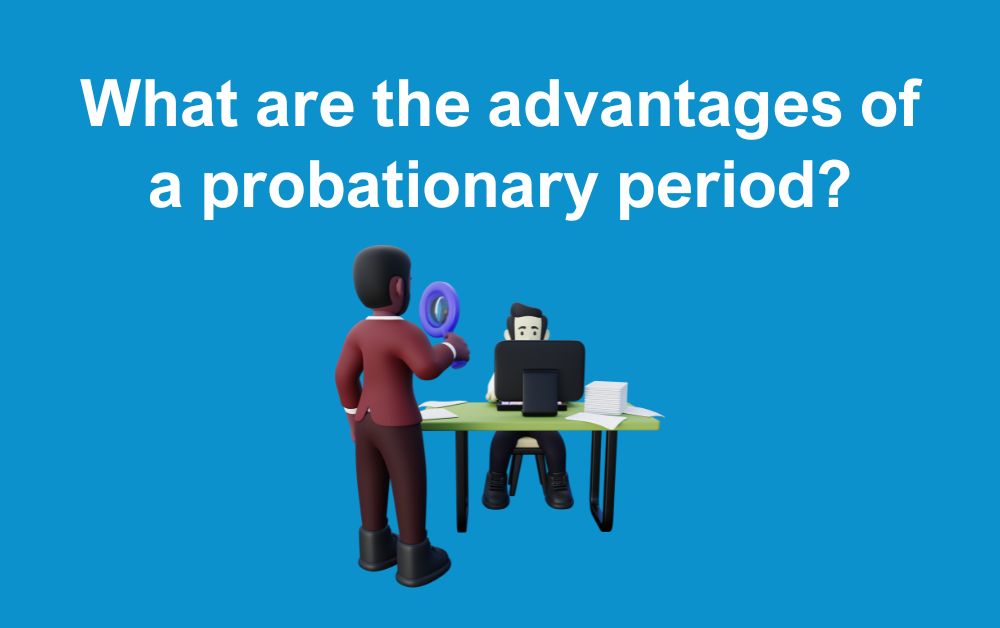
A probation period is a set timeframe at the beginning of employment, most commonly three or six months, used to assess whether a new employee is the right fit for the role and the organisation.
While probation periods are not a legal requirement, they remain best practice for UK employers and, with upcoming changes under the Employment Rights Bill, they are more important than ever to manage properly.
Below, we explore the key advantages of using a probationary period and how to get the most value from it.
A structured way to assess suitability for the role
One of the biggest advantages of a probationary period is that it gives employers a defined opportunity to assess whether the employee is suitable for the role.
Furthermore, this assessment should go beyond basic performance and consider factors such as:
- Quality and consistency of work
- Job suitability and skills
- Timekeeping and attendance
- Behaviour and attitude
- How well training has been completed and applied
- Cultural fit within the team
This structured approach helps ensure decisions are based on evidence rather than gut feeling.
Creates a framework for regular feedback
A well-managed probation period provides a clear framework for regular check-ins and also feedback discussions.
Rather than waiting until the end of the three or six months, employers should sit down with the employee on a regular basis to:
- Review progress
- Discuss what is going well
- Identify areas for improvement
- Set clear, measurable targets for the next review period
This ongoing dialogue supports development and reduces uncertainty for both parties.
Encourages early, honest conversations
In practice, many managers find difficult conversations uncomfortable and may delay addressing performance concerns.
A probationary period creates a natural forum to raise issues early, in a structured and professional way. This prevents problems from being ignored and becoming more serious later.
Handled properly, these conversations should feel supportive and constructive rather than punitive.
Avoids surprises at the probation review stage
Our advice is simple: there should never be any surprises at the final probation review. This is whether the probation period is three or six months, the employee should already understand:
- How they are performing
- What they are doing well
- Where improvement is required
- Whether their role is at risk
Ending employment at probation without prior warning is poor practice and also increases the risk of disputes. Regular, documented feedback ensures expectations are clear throughout.
Allows flexibility through probation extensions
Sometimes a three-month probation period may feel too short to fully assess someone’s capability, particularly in complex roles.
In these situations, it is reasonable to extend the probation period, provided:
- The extension is confirmed in writing
- The length of the extension is clear
- The reasons for the extension are explained
- A schedule of regular review meetings is agreed
- Specific improvement targets are set
This gives the employee a fair opportunity to demonstrate progress while protecting the business.
Supports compliance ahead of employment law changes
Currently, probation periods do not have specific legal status under UK employment law and are not mandatory.
However, the forthcoming Employment Rights Bill will introduce significant changes, including enhanced day one employment rights and the removal of the two-year qualifying period for unfair dismissal claims. This means employers will need to be much more confident in early hiring decisions and documentation.
Using the probation period properly will be critical to:
- Identifying concerns early
- Demonstrating fair process
- Keeping accurate records
- Making defensible decisions if employment does not continue
In short, probation periods are becoming a practical necessity, not just a formality.
Helps prepare and upskill managers
To be effective, probation periods must be managed consistently by line managers.
This means organisations should:
- Train managers on how to run probation reviews
- Provide guidance on giving constructive feedback
- Offer support with handling difficult conversations
- Ensure managers understand upcoming legal changes
Without this, probation periods often become a tick-box exercise rather than a meaningful process.
Clarify expectations in policies and procedures
Your probation process should be clearly documented in your HR policies and procedures, including:
- Length of probation
- Review frequency
- Performance criteria
- Extension process
- Confirmation procedure
This ensures consistency and protects the business if decisions are challenged.
Provides a clear paper trail
At the end of the probation period, the outcome should always be confirmed in writing.
This applies whether:
- The probation is successfully completed
- The probation is extended
- Employment is terminated
Documentation should clearly state:
- What performance standards were assessed
- What feedback was provided
- Any targets set
- The final decision and reasoning
A clear paper trail is vital for risk management and future reference.
Final thoughts
A probationary period is there to safeguard the business and to also support the employee.
When managed properly, it:
- Reduces hiring risk
- Improves performance
- Encourages open communication
- Protects the organisation legally
- Gives employees clarity and the opportunity to raise concerns early
With employment law changes on the horizon, now is the time to review how your probation periods are structured, documented and also managed.
If you would like support reviewing your probation process, updating your policies, or training managers to handle probation reviews effectively, our HR experts are happy to help.