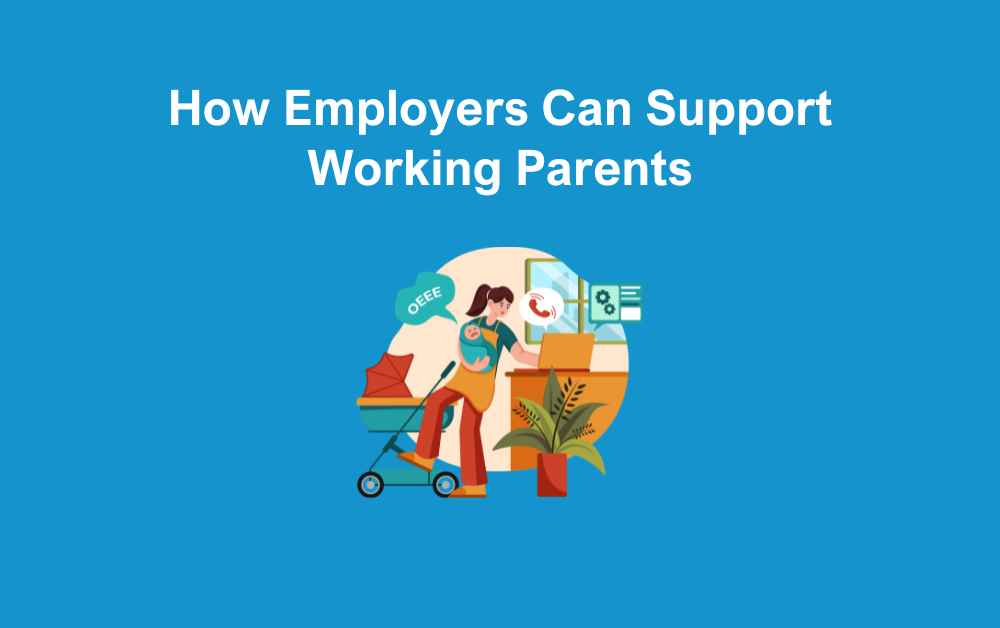
Working parents face a unique set of challenges in the workplace. Juggling childcare responsibilities alongside work commitments is becoming increasingly difficult, especially as the cost of childcare continues to rise each year. Government support often falls short, leaving many parents questioning whether staying in work is financially viable.
However, it’s not just financial pressures and childcare concerns affecting working parents. The struggle to maintain a healthy work-life balance can significantly impact mental health. Research by Kooth revealed that one in three working parents feel unsupported by their employer. More than half of those surveyed believed their workplace could be doing more to meet their needs. The Holiday season is just around the corner and this can be a difficult time for parents balancing work and childcare. In this blog post, we explore how employers can support working parents during this time.
Flexible Working
Providing flexible working options is one of the most effective ways to support working parents, particularly during school holidays when childcare demands increase. Flexibility shows trust and understanding, allowing employees to balance their personal responsibilities without compromising their professional performance.
There are several approaches employers can take:
-
Flexible Hours – Letting parents start and finish work earlier or later can help them accommodate school drop-offs, pick-ups, and family routines.
-
Compressed Hours – Some parents may prefer to work longer days over fewer days, freeing up an extra day during the week to focus on childcare.
-
Remote or Hybrid Working – Allowing staff to work from home, even part of the week, can reduce commuting time and ease the pressure of managing holiday care.
-
Part-Time or Job Sharing – For those who need a more significant adjustment, part-time work or job sharing can offer a long-term solution without losing valuable talent.
This kind of flexibility empowers working parents to attend school events, manage childcare changes, and meet family obligations, all while continuing to deliver on their responsibilities at work. It also helps to build a culture of trust, loyalty, and wellbeing—key ingredients for a more engaged and productive workforce.
Term Time Working
Amazon announced that they will offer parents and grandparents to work term-time only. This means that working parents can get 6 weeks off over summer and two weeks off During Easter and Christmas. Amazon’s Regional Operations Manager, Neil Travis said:
“We spent a lot of time listening to our employees and one of the things that we were learning is that they really wanted more flexible opportunities,” Travis also mentioned that employees will benefit from full time benefits with this contract.
If this is something that may work for your business, we encourage you to consider it.
Annual Leave or TOIL
Encouraging staff to take their annual leave or time off in lieu (TOIL) is essential—particularly over the holiday period. Many working parents are reluctant to ask for time off due to workload or workplace culture. Managers should lead by example and openly support employees in taking the time they need to recharge and spend with their families.
Manage Requests Fairly
The holiday period often sees an influx of leave requests. It’s important to have a transparent and fair process for approving leave to avoid conflict or resentment. Encourage early planning and communicate clearly about how decisions will be made. Fairness and consistency are key.
Employee Benefits
Incorporating family-friendly support to your employee benefit schemes is another way to help staff.
Moments that matter
We offer an employee benefit to our team that allows them to have paid time off for ‘moments that matter’. This can be to attend a nativity play, sports day, wedding day, or moving house. We want our team to know we care and we don’t want them to miss important moments in their life.
Employee Assistance Programme
Another effective way employers can support working parents is by offering an Employee Assistance Programme (EAP). These programmes provide confidential access to professionals such as psychologists and therapists, offering vital support for parents who may be struggling with their own mental health or concerned about their child’s wellbeing. EAPs can be a valuable lifeline, helping families access expert guidance and support when it’s needed most.
Childcare Support
Where possible, employers can also consider offering practical childcare solutions:
-
Childcare Vouchers or Allowances – Contributing towards childcare costs, even on a small scale, can make a big difference to parents managing tight budgets.
-
On-Site or Partnered Childcare – Larger organisations might explore on-site childcare or partnerships with local nurseries to provide discounted access.
-
Phased Return to Work – For parents returning from parental leave, offering a phased return can help ease the transition back to work without overwhelming them.
Management Training
Line managers have a crucial role to play in supporting working parents, particularly when it comes to creating an inclusive and flexible working environment. Providing managers with the right training helps them understand the specific challenges that working parents face—such as time constraints, emotional fatigue, and unexpected childcare issues—and how to respond with empathy and practical solutions. Effective training can also equip managers to balance the needs of individual team members with overall team performance, ensuring business continuity while maintaining staff wellbeing.
At The HR Booth, we’ve supported a wide range of organisations through our tailored management training programmes, helping them build confident and compassionate leaders. You can learn more about how we can support your business by visiting our website.
Organise Family-Friendly Events
During the festive season, company events are often part of the culture—but these can unintentionally exclude those with young children. Consider offering family-friendly options such as afternoon gatherings or events that include children. It’s a great way to make everyone feel part of the team.
Final Thoughts
Supporting working parents isn’t just about policies—it’s about culture. Small changes and a bit of empathy can go a long way. By introducing flexible practices, improving communication, and offering targeted support, employers can make a real difference in the lives of working parents—especially during demanding periods like the school holidays.
Contact Us
Looking for tailored HR advice on how employers can support working parents and creating family-friendly policies? Get in touch with The HR Booth today.