Under the Equality Act, a person is considered to have a disability if they have a mental impairment with a substantial and long-term negative impact on their ability to carry out normal daily activities. ‘Substantial’ means more than minor or trivial, and ‘long-term’ usually means 12 months or more.
This can include conditions like anxiety, depression, panic attacks, eating disorders, PTSD, OCD, and bipolar disorder, though this list isn’t exhaustive. Some people may not see their mental health condition as a disability, but employers should still take all mental health concerns seriously.
Mental health issues can develop suddenly or gradually, and symptoms may be hidden or vary over time. It’s vital employers understand these signs can differ from person to person and be ready to offer support when needed.
Examples of Reasonable Adjustments for Mental Health
There are many ways you can support your employee. This includes:
- Offering Flexible working hours or hybrid working where employees can split their time at home and in the office.
- Making adjustments to your recruitment process such as additional time to complete assessments or tests.
- Reduced or adjusted workload and a phased return to work.
- Create quiet spaces or private work areas in the office so staff have a place to go if they are feeling anxious or stressed. You can even look at adjusting lighting in this room to make it more calming.
- Regular wellbeing check-ins with line managers to see how staff are and if any further adjustments need to be made.
- Time off for therapy, medical appointments, or counselling
- Providing mental health first aiders or training for managers to understand how to deal with mental health in the workplace correctly.
- Adjusting breaks so employees can take more but shorter breaks if they prefer.
When making reasonable adjustments for mental health, it’s important to remember that both jobs and individuals vary, so a one-size-fits-all approach rarely works. Mental health needs can also change over time, so it’s best for employers and employees to work together to agree and regularly review adjustments to ensure they remain effective.
How to Identify and Implement Mental Health Adjustments
Putting reasonable adjustments for mental health in place starts with good communication and a supportive approach. Here’s how employers can identify what’s needed and implement effective support:
1. Encourage Open Dialogue
Create a workplace culture where employees feel safe to talk about their mental health. Line managers should be trained to recognise signs of poor mental wellbeing and to start supportive conversations.
2. Hold a Private, Supportive Discussion
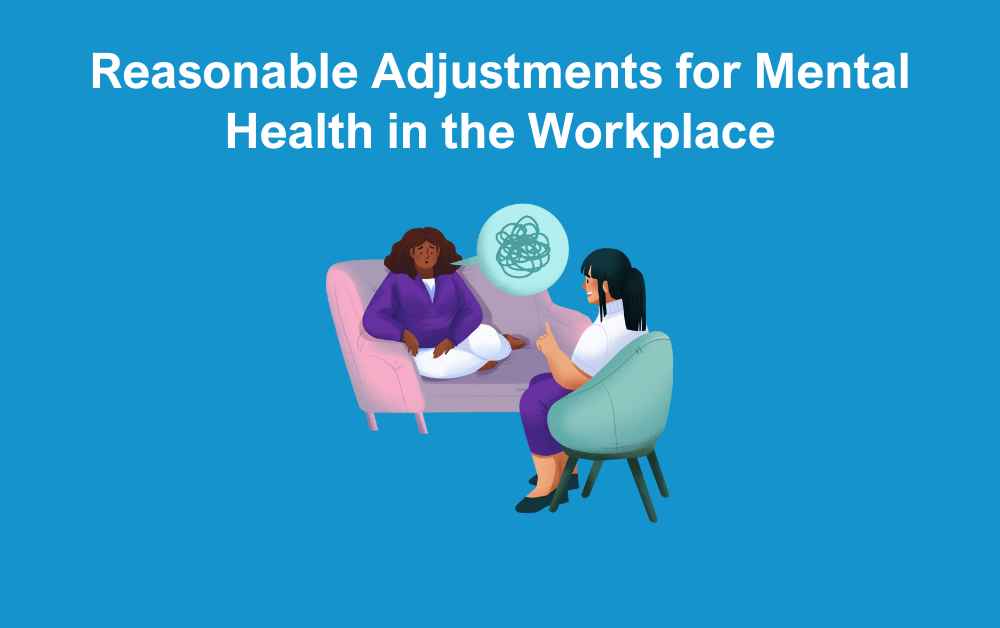
When an employee discloses a mental health issue, arrange a confidential meeting to talk through how their condition affects their work. Ask open questions and listen carefully to what they need.
3. Use Wellness Action Plans (WAPs)
Wellness Action Plans are simple tools that help employees identify triggers, coping strategies, and adjustments that may help. These can guide ongoing conversations and help track what’s working.
4. Seek Occupational Health or HR Advice
If the situation is complex, involve an occupational health professional or HR support. They can recommend specific, tailored reasonable adjustments for mental health based on medical advice.
5. Put Adjustments in Writing
Once agreed, document the adjustments clearly and share them with the employee. This helps manage expectations and ensures consistency across the team.
6. Review Regularly
Because mental health needs can change, set regular review points—especially after any changes in workload, responsibilities, or health. Check in with the employee to see if the adjustments are still helpful or need to be updated.
By working collaboratively and reviewing adjustments over time, employers can ensure they are providing meaningful, lawful, and practical support that helps their team members stay well and productive at work.
Failure to Implement Adjustments for Mental Health in the Workplace
Employers are legally required to consider requests made for reasonable adjustments at work. However, they don’t have to automatically agree if the request is considered unreasonable.
It’s important to keep in mind that failing to make reasonable adjustments for mental health can result in serious consequences. It may even lead to serious allegations of unlawful disability discrimination at a employment tribunal.
There’s no limit to the compensation a tribunal can award if an employer is found guilty of disability discrimination. Even if a claim is dismissed, the process can be costly, time-consuming, and damaging to the employer’s reputation.
That’s why it’s vital for employers to recognise signs of poor mental health and respond appropriately to any concerns raised.
Contact Us
Making reasonable adjustments for mental health isn’t just a legal obligation for UK employers, it’s a vital step towards creating a supportive, inclusive workplace. Whether you’re managing a small team or leading a larger organisation, recognising mental health challenges and responding with empathy and practical support can make a real difference.
Take the time to review your current policies, speak openly with your team, and consider what adjustments may be needed to help employees thrive. If you’re unsure where to start, seeking guidance from professionals can give you the confidence to take the right steps.
We support UK employers with practical, compliant solutions for managing mental health in the workplace. Get in touch if you’d like help putting the right adjustments and policies in place.