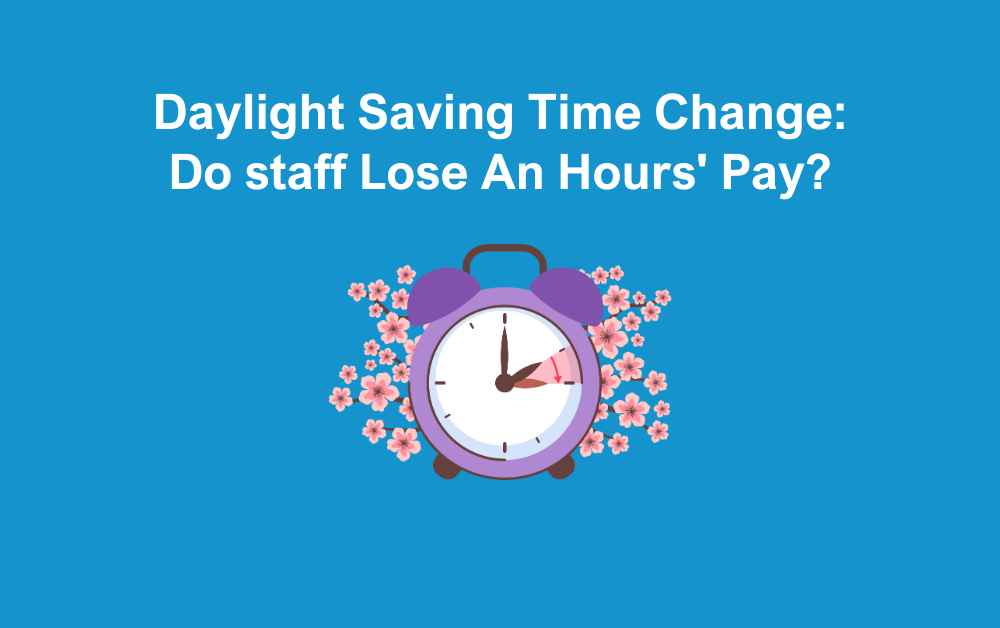
The daylight saving time change happens on 30 March 2025 at 1am, and we’re already dreading that lost hour of sleep! For employees working overnight, they will see the clocks jump from 1am to 2am, effectively shortening their shift by an hour. This often raises questions for employers about whether staff should be paid for the full shift or just the hours actually worked. Understanding how to handle this fairly and in line with employment contracts and regulations is important to avoid disputes. In this blog, we will explore the key considerations for employers, including legal obligations, best practices, and ways to maintain positive employee relations during the daylight saving time change.
Check Employee Contracts
The first thing to do is to check if your staff are contracted to an hourly rate or fixed daily rate. If employees are paid an hourly rate, they are typically only entitled to payment for the actual hours worked.
However, if employees are on a fixed daily or salaried contract, their pay is unlikely to be affected by the time change. This is due to the fact they are generally paid a set amount regardless of the number of hours worked on a particular shift.
Employers should carefully review contract terms that entitle employees to full pay for a set number of hours—such as 35 hours per week—even if only 34 hours have been worked due to the daylight saving time change.
In some cases, contracts may outline how daylight saving time adjustments should be managed. Therefore, it’s important to review the wording carefully. If you choose to pay employees for the full shift despite the shorter working hours, this is at your discretion. This can be a goodwill gesture to support staff morale. This will give them an extra hour to take back in a later date.
Do you need staff to work longer during the daylight saving time change?
If staff clock off at their usual time but you need them to stay an extra hour, this may have a negative impact on contract fulfillments and targets. You can offer paying your employee overtime for the extra hour or time of in lieu. However, it’s important to keep in mind that employees shouldn’t work more than 48 hours each week. This is unless they have opted out of the maximum weekly limit. Therefore, you must check the maximum limit will not be breached by asking staff to do this.
It’s important to consider employees’ personal obligations when coming to this decision. Some staff may not be able to work the extra hour due to childcare or any other personal responsibilities. To ensure fairness, communicate with your team in advance about any potential schedule changes. Give them the opportunity to express any concerns.
Additionally, if you require staff to work the extra hour, ensure this aligns with their contract terms and that they are properly compensated. If overtime pay or time off in lieu is offered, make sure it is applied consistently across all affected employees.
Clear communication and fair treatment will help maintain positive employee relations. It will also prevent any potential disputes arising from the daylight saving time change.
What About the Extra Hour in Autumn?
When the clocks go back in October, employees working overnight effectively work an extra hour. In most cases:
- Hourly workers should be paid for the extra hour worked.
- Salaried staff are usually unaffected unless their contract stipulates a specific shift length.
- Employers should ensure that this additional hour does not push employees beyond their legal working time limits.
Legal Considerations for Employers
-
National Minimum Wage Compliance
- Employers must ensure that the adjusted working hours do not inadvertently result in staff being paid below the NMW.
-
Working Time Regulations
- Employers should check whether the extra hour in autumn affects rest periods and maximum working hours in line with UK Working Time Regulations.
-
Fairness and Staff Morale
- Employees may feel unfairly treated if they lose an hour’s pay in spring but are expected to work an extra hour in autumn. Some businesses choose to balance this out by offering consistent pay regardless of the time change.
Best Practices for Employers
- Clearly communicate how the clock change will affect pay and working hours in advance.
- Review employment contracts to ensure compliance with legal and contractual obligations.
- Consider offering flexibility to employees who lose an hour in spring by allowing them to make up the time.
- Ensure payroll systems are updated to reflect the correct hours worked.
Conclusion
Managing the daylight saving time change effectively is essential to ensure fairness and compliance with employment regulations. Reviewing employee contracts, understanding pay entitlements, and considering the impact on working hours will help employers make informed decisions. Open communication with staff and a consistent approach to handling shift changes can also prevent misunderstandings.It will go a long way to maintain positive workplace relationships.
How The HR Booth Can Help
If you’re unsure how to handle pay, shift changes, or contract terms related to daylight saving time, The HR Booth is here to help. We can review your employment contracts, provide expert guidance, and support you in implementing fair and practical solutions. Our team can also assist with communicating changes to employees and ensuring compliance with working time regulations.
For personalised HR advice and support, get in touch with us today.